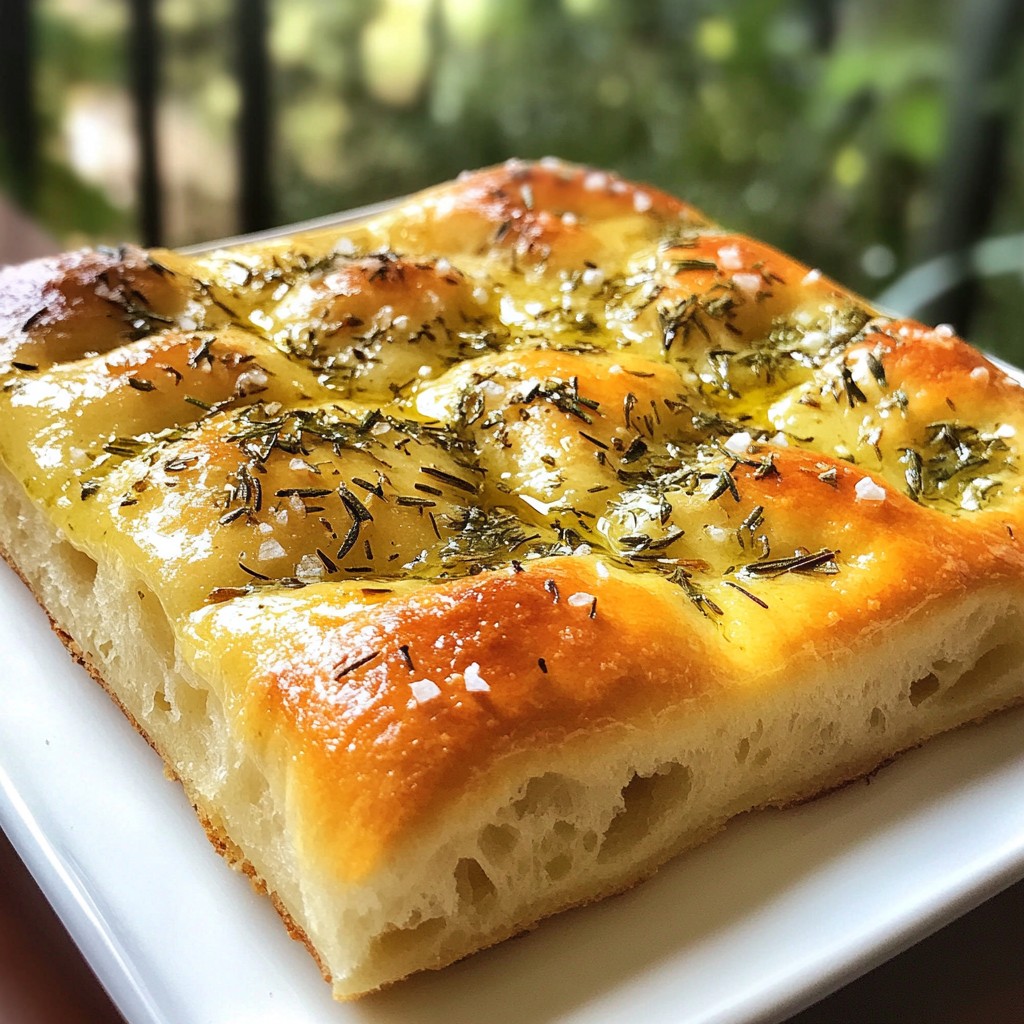
Are you ready to elevate your bread game? This Garlic Herb Focaccia is simple, flavorful, and perfect for any meal. With just a few key ingredients, you’ll create a soft, delicious loaf that pairs well with soup or stands on its own as a snack. Join me as we dive into this easy recipe, packed with tips to help you make the best focaccia ever. Let’s get baking!
Why I Love This Recipe
- Easy to Make: This focaccia recipe is straightforward, requiring minimal ingredients and steps, making it perfect for both beginners and seasoned bakers.
- Customizable: You can easily alter the toppings to suit your taste, adding different herbs, cheeses, or even olives for a unique twist.
- Perfect Texture: With its crispy edges and soft, airy interior, this focaccia has the ideal texture that pairs well with soups, salads, or enjoyed alone.
- Aromatic Flavors: The combination of garlic and fresh herbs not only enhances the taste but also fills your kitchen with an irresistible aroma while baking.
Ingredients
List of Ingredients
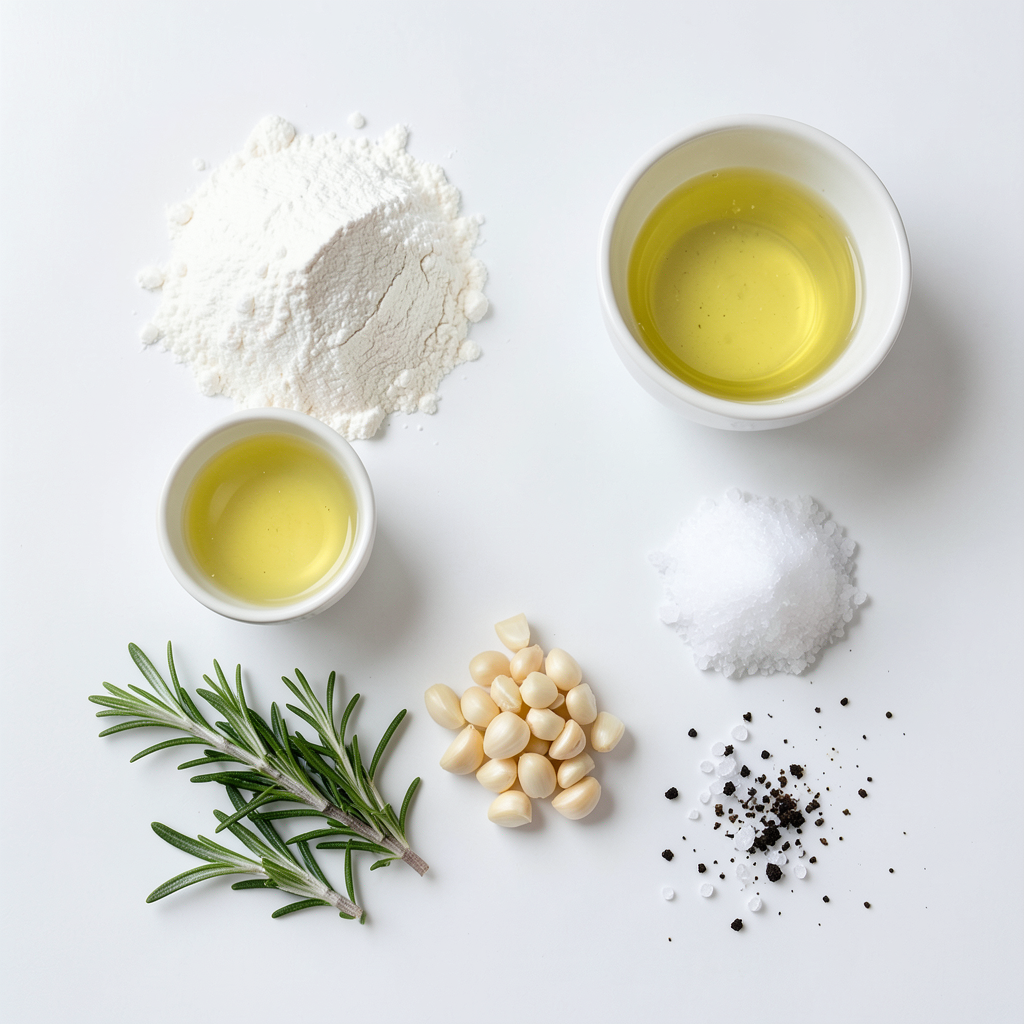
- 4 cups all-purpose flour
- 2 cups warm water (110°F / 45°C)
- 2 tablespoons active dry yeast
- 2 teaspoons sugar
- 1 tablespoon salt
- 1/4 cup olive oil (plus extra for drizzling)
- 6 cloves garlic, minced
- 2 tablespoons fresh rosemary, chopped (or 1 tablespoon dried)
- 1 tablespoon sea salt (for topping)
- Freshly cracked black pepper (optional)
Ingredient Substitutions
You can switch all-purpose flour for whole wheat flour. This adds more fiber. You can also use spelt flour for a nutty twist. If you like, try different herbs. Basil, thyme, or even sage can work well. Garlic powder is fine, but fresh garlic gives better flavor. Use what you have on hand.
Important Ingredient Notes
The quality of your yeast matters. Fresh yeast will make your bread rise well. Older yeast may not work as nicely. Use high-quality olive oil for rich taste. Extra virgin is my top choice. Fresh herbs always taste better than dried. They add more aroma and flavor to your bread.
Step-by-Step Instructions
Preparation of the Dough
To start, you need to activate the yeast. In a large bowl, mix warm water, sugar, and active dry yeast. Let it sit for 5-10 minutes. You want it to get frothy. This shows the yeast is alive. Next, add the flour, salt, and olive oil to the yeast mix. Stir until a soft dough forms. Then, knead the dough on a floured surface for 8-10 minutes. It should feel smooth and elastic when done.
First Rise
The first rise is key for fluffy focaccia. Place your kneaded dough in a lightly oiled bowl. Cover it with a damp cloth. Let it rise in a warm spot for about 1 hour. The dough should double in size. You can tell it’s ready when you gently press it, and it springs back slowly.
Shaping and Second Rise
After the first rise, gently punch down the dough. Transfer it to a greased baking sheet. Spread it out to about 1/2 inch thick. Use your fingers to create deep dimples all over the surface. This helps hold the garlic and herbs later. Now, let it rest for 20 minutes while the oven heats up. This second rise makes the focaccia even fluffier.
Baking Process
Preheat your oven to 425°F (220°C). Once the dough has rested, it’s time to bake. For a perfect crust, bake the focaccia for 20-25 minutes. You want it golden brown and crispy on the edges. When it’s done, remove it from the oven. Drizzle a little more olive oil on top while it’s warm. Enjoy the aroma as it fills your kitchen!
Tips & Tricks
Perfecting Your Focaccia
Kneading is key to a great focaccia. You want to knead the dough for about 8-10 minutes. This builds gluten, which gives your bread a nice stretch. If the dough feels too sticky, sprinkle a bit of flour on your hands and the surface. Keep working until it feels smooth and elastic. You should be able to stretch it without tearing.
Flavor Enhancements
To make your focaccia even tastier, think about adding cheese, olives, or more herbs. Try adding a sprinkle of Parmesan cheese on top before baking. This will give it a rich flavor. You can also mix in olives or sun-dried tomatoes into the dough. Fresh herbs like thyme or oregano can add a nice twist. Experiment and find what you love!
Troubleshooting Common Issues
If your dough is too sticky, don't panic. Just add a little more flour as you knead. If your focaccia isn’t rising well, check your yeast. It should be frothy after mixing with warm water and sugar. If it isn’t, your yeast may be old. Always use fresh ingredients for the best results. Remember, the dough should double in size during the first rise. If it doesn’t, it may need a warmer spot.
Pro Tips
- Use Fresh Ingredients: Always opt for fresh herbs and garlic for the best flavor; dried herbs can work in a pinch, but fresh ones will elevate your focaccia.
- Perfect Your Dimpling: When creating dimples in the dough, press firmly but not too hard; this helps the olive oil and garlic mixture seep into the bread for maximum flavor.
- Temperature is Key: Ensure your water is at the right temperature (110°F / 45°C) to activate the yeast effectively; too hot or too cold can hinder the rising process.
- Experiment with Toppings: Feel free to customize your focaccia with additional toppings like olives, sun-dried tomatoes, or cheese for a unique twist each time you bake!
Variations
Herb Combinations
You can change the flavor of your focaccia by using different herbs. I love using fresh thyme and oregano. They add a lovely aroma and taste. You can also mix them with rosemary for a more complex flavor. Just chop them finely and spread them over the dough. This small change makes a big difference.
Adding Sweet Elements
Want to make your focaccia extra special? Try adding caramelized onions or sun-dried tomatoes. The sweet onions bring a rich flavor that pairs well with garlic. The sun-dried tomatoes add a nice tartness. You can add these on top of the garlic mixture before baking. This will give you a sweet and savory focaccia that everyone will love.
Gluten-Free Options
If you need a gluten-free focaccia, there are great flour substitutes. You can use almond flour or a gluten-free blend. Just make sure to check the package for the right amount of liquid. Gluten-free dough can be a bit different, so it might take some practice. But with a little effort, you can enjoy focaccia without gluten!
Storage Info
How to Store Focaccia
To keep your garlic herb focaccia fresh, store it properly. If you plan to eat it within a day or two, keep it at room temperature. Place it in a paper bag or wrap it in a clean cloth. This method prevents it from getting too soft.
For longer storage, you can refrigerate it. Wrap the focaccia in plastic wrap or foil. This will help it stay fresh for up to five days. However, refrigeration can change the bread's texture.
Freezing is the best way to store focaccia for a long time. Slice the focaccia into pieces. Wrap each slice tightly in plastic wrap, then place them in a freezer bag. It will stay fresh for about three months. When you're ready to enjoy it, let it thaw at room temperature.
Reheating Instructions
To reheat focaccia, the oven works best. Preheat your oven to 350°F (175°C). Place the focaccia on a baking sheet. Heat it for about 10-15 minutes. This keeps the crust crispy and the inside warm.
If you only have a microwave, use it as a last resort. Wrap the focaccia in a damp paper towel. Heat it for about 20-30 seconds. This method helps it stay soft but may not give you the crispy crust you want.
Shelf Life
Garlic herb focaccia stays fresh for about two days at room temperature. In the fridge, it can last up to five days. When frozen, you can enjoy it for up to three months. Always check for any signs of spoilage before eating. If it has a strange smell or looks off, it’s best to throw it away.
FAQs
Can I make Garlic Herb Focaccia ahead of time?
Yes, you can make Garlic Herb Focaccia ahead of time. To do this, prepare the dough up to the first rise. After the dough rises, punch it down and shape it. You can wrap it tightly in plastic wrap or place it in a sealed container. Store it in the fridge for up to 24 hours. When you're ready to bake, let it come to room temperature. Allow it to rise again for about 20 minutes before baking. This method saves time and ensures fresh bread any day.
What can I serve with Garlic Herb Focaccia?
Garlic Herb Focaccia pairs well with many dishes. Here are some great options:
- Olive oil and balsamic vinegar for dipping
- Soups like minestrone or tomato
- Salads, especially Caesar or mixed greens
- Charcuterie boards with meats and cheeses
- Grilled vegetables for a colorful side
Each pairing enhances the flavors of the focaccia.
How do I know when the focaccia is done?
You can tell if the focaccia is done by its color and texture. Look for a golden brown top with crispy edges. Gently press the center; it should feel firm and spring back. If you tap the bottom, it should sound hollow. These signs mean your focaccia is ready to enjoy!
Making Garlic Herb Focaccia is a rewarding process. We covered key ingredients and their substitutes. You learned how to prepare, rise, shape, and bake the dough. I shared tips for a perfect texture and flavor, and we explored fun variations. Remember to store your focaccia well to enjoy it longer. With these steps and insights, you can create a delicious focaccia that impresses family and friends. Enjoy baking and savoring this delightful bread!