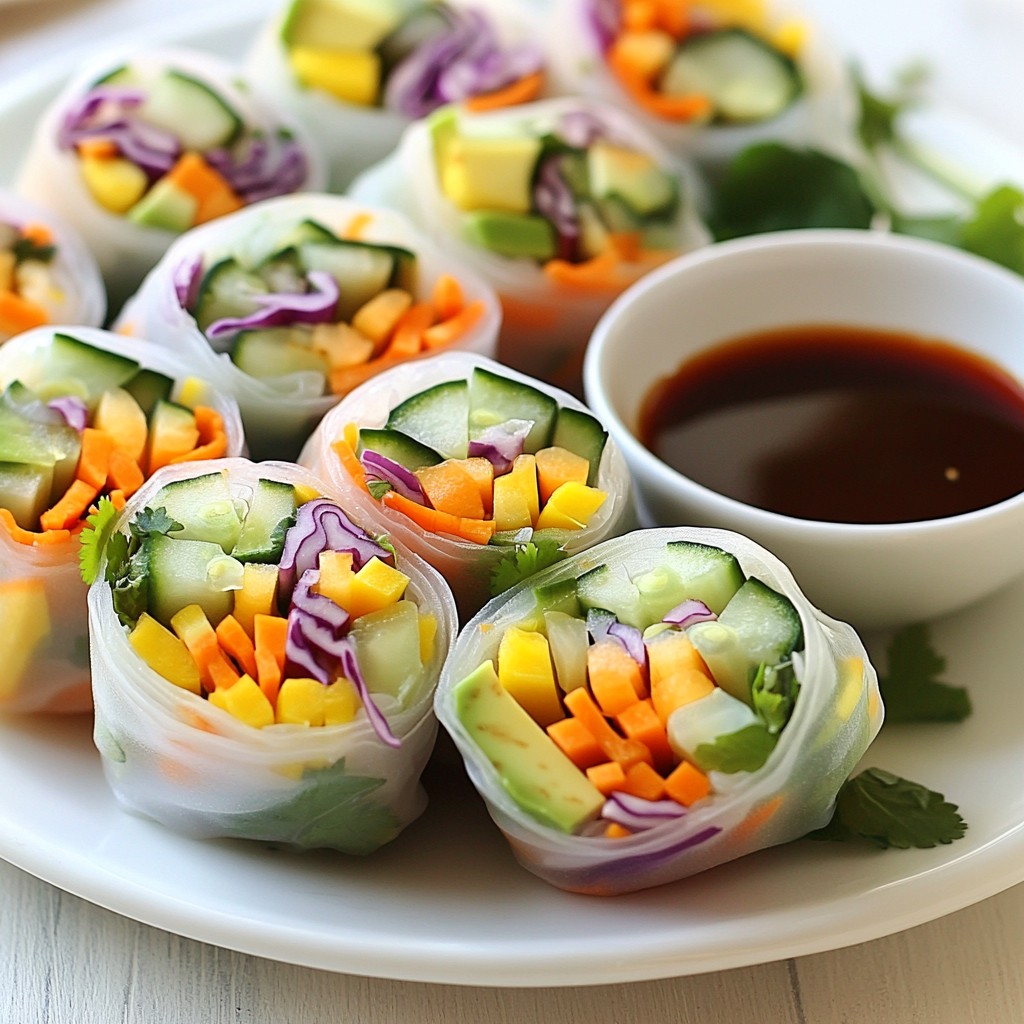
Looking for a fresh and crunchy snack? Rainbow Veggie Spring Rolls will brighten your day! These colorful rolls pack a punch with tasty veggies like red cabbage, crisp cucumbers, and creamy avocado. They’re not just easy to make; they're also fun to customize! Dive into this post for step-by-step instructions, handy tips, and variation ideas to help you create your perfect spring roll. Get ready to roll!
Why I Love This Recipe
- Fresh and Vibrant: These spring rolls are bursting with color and fresh veggies, making them a feast for the eyes as well as the palate.
- Healthful Ingredients: Packed with nutritious vegetables and herbs, these spring rolls are a healthy choice for a light meal or snack.
- Customizable: You can easily modify the fillings to suit your taste or dietary preferences, making this recipe versatile and fun.
- Easy to Make: With just a few simple steps, you can whip up these delightful spring rolls in no time, perfect for gatherings or meal prep.
Ingredients
List of Fresh Vegetables
- Red cabbage
- Carrots
- Cucumbers
- Bell peppers
- Avocado
Additional Ingredients
- Rice paper wrappers
- Fresh herbs
- Vermicelli noodles (optional)
- Hoisin sauce
- Lime juice
Seasoning
- Salt and pepper
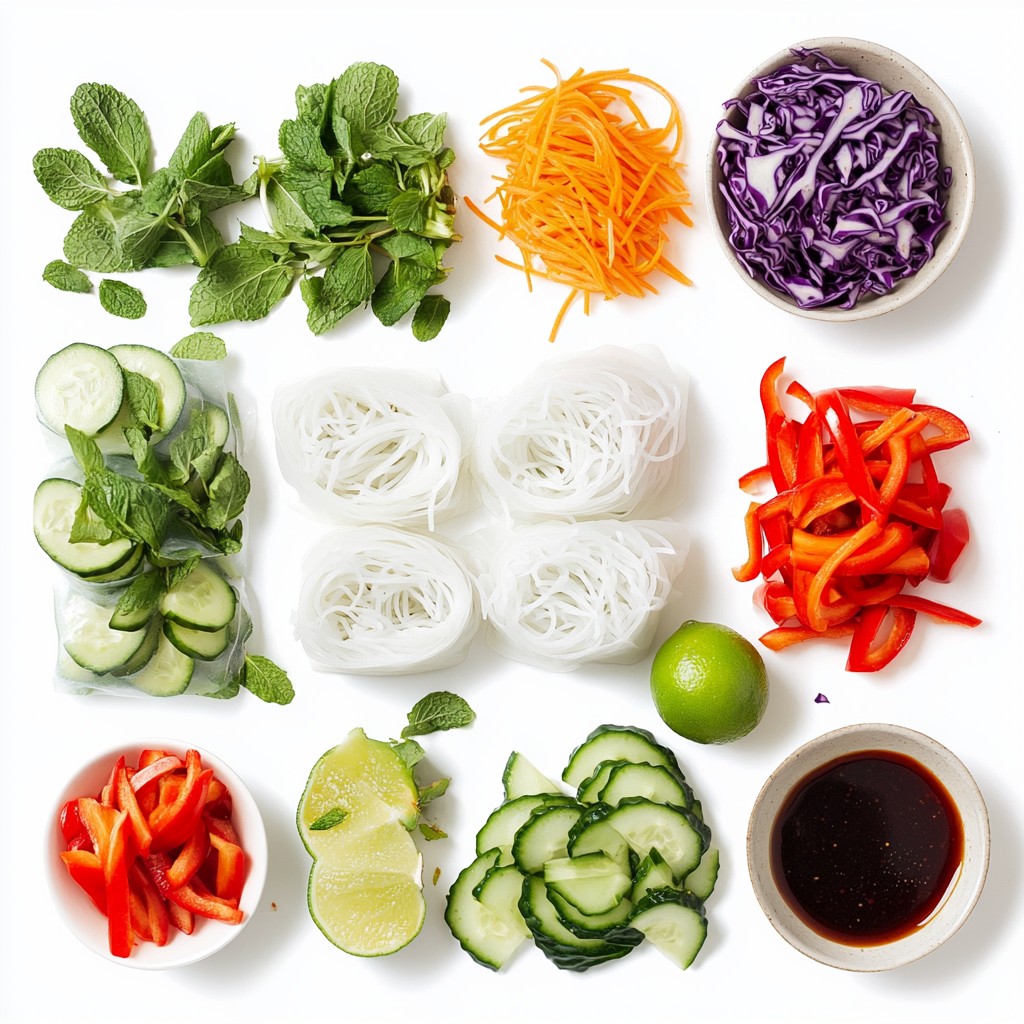
Gathering fresh ingredients is key to making these vibrant rainbow veggie spring rolls. Each vegetable adds color, crunch, and flavor. I love using:
- Red cabbage: It brings a lovely purple hue and a nice crunch.
- Carrots: Their sweetness contrasts well with other veggies.
- Cucumbers: They add a refreshing, crisp texture.
- Bell peppers: Use mixed colors for a fun look and varied taste.
- Avocado: This creamy fruit gives a rich mouthfeel.
For the wrappers, choose rice paper. They are light and let the filling shine. You can add fresh herbs like mint and cilantro for extra flavor. If you want, include vermicelli noodles for a fun twist.
Don't forget the hoisin sauce for dipping. It adds sweetness and depth. A squeeze of lime juice brightens the flavors. Finally, season with salt and pepper to taste. This mix of fresh ingredients makes every bite a delight!
Step-by-Step Instructions
Preparing the Rice Paper Wrappers
To start, fill a large bowl with warm water. This will help soften the rice paper. You need to soak each wrapper for about 10-15 seconds. It should feel soft and bendy, not soggy. Once ready, take it out and place it on a clean surface. A damp kitchen towel also works well. This keeps the wrapper from sticking.
Assembling the Spring Rolls
Now, it's time to layer your fillings. Begin at the bottom third of the wrapper. If you want, add a small amount of cooked vermicelli noodles first. Next, stack a little red cabbage, carrots, cucumber, bell peppers, avocado, and some mint and cilantro.
After adding the fillings, squeeze a bit of lime juice on top. Sprinkle with salt and pepper for taste. To fold, bring the sides of the rice paper over the fillings. Then, roll it tightly from the bottom to the top. Make sure it is sealed well. Repeat this with the other wrappers and fillings.
Serving the Spring Rolls
For presentation, cut each spring roll in half. Arrange them on a bright plate. This showcases the colorful veggies inside. Place a small bowl of hoisin sauce in the center for dipping. This adds a sweet touch and makes the dish even more delicious. Enjoy your fresh and crunchy snack!
Tips & Tricks
How to Keep Rolls from Sticking
To keep your rolls from sticking, store them carefully. Place a damp cloth under the rolls as you prepare them. This dampness helps reduce sticking. Use an extra cloth to cover the rolls as you work. This method keeps them moist and fresh.
Perfecting Flavor Combinations
Seasoning is key for tasty spring rolls. A squeeze of lime juice adds zest. Salt and pepper enhance the flavor too. You can also mix in fresh herbs like mint and cilantro. These herbs bring freshness and depth to each bite. Try different herbs to find your favorite taste.
Common Mistakes to Avoid
Avoid overfilling your rolls. Too much filling makes rolling hard and messy. Stick to a small amount of each veggie. Also, ensure you soften the wrappers enough. If they are not soft, they may crack when you roll. Dip them in warm water for 10-15 seconds. This step is crucial for perfect spring rolls.
Pro Tips
- Soften Gradually: When dipping the rice paper wrapper, ensure you do not over-soak it. It should be soft but not falling apart; about 10-15 seconds is ideal.
- Layering Technique: Start with the firmer vegetables like cabbage and carrots at the bottom, followed by softer ingredients like avocado and herbs on top for better texture and flavor.
- Chill for Freshness: If possible, refrigerate the prepared spring rolls for 10-15 minutes before serving. This helps them firm up and enhances the refreshing taste.
- Dipping Sauce Variations: Feel free to experiment with different dipping sauces, such as peanut sauce or a spicy soy sauce, for added flavor and variety!
Variations
Alternative Fillings
You can change the veggies in your spring rolls. Try adding different colors for a fun look. Some options are:
- Spinach
- Radishes
- Jicama
- Zucchini
- Asparagus
Adding protein boosts flavor and makes your rolls more filling. Some great choices are:
- Tofu, cubed and cooked
- Shrimp, cooked and peeled
- Grilled chicken, sliced thin
Dipping Sauce Variations
A tasty sauce makes spring rolls even better. Here are two great options:
- Peanut sauce: Mix peanut butter, soy sauce, lime juice, and a bit of honey. This sauce adds a nutty flavor.
- Spicy sriracha dressing: Blend sriracha with lime juice and a touch of honey. This sauce brings a nice heat.
Seasonal Adjustments
Seasonal veggies keep your spring rolls fresh and fun. In summer, you can use:
- Cucumbers
- Bell peppers
- Fresh herbs
In winter, you might try:
- Roasted sweet potatoes
- Thinly sliced carrots
- Winter greens
Using what is in season makes your rolls taste better and supports local farms. Enjoy exploring new flavors!
Storage Info
How to Store Leftover Spring Rolls
To store leftover spring rolls, put them in a clean, airtight container. Place a damp paper towel inside to keep them moist. Seal the container tightly. Store it in the refrigerator. Use them within two days for the best taste. If you notice any sogginess, you can re-crisp them in a hot pan.
Freezing Spring Rolls
If you want to freeze spring rolls, first, let them cool completely. Lay them flat on a baking sheet lined with parchment paper. Freeze them for about an hour. Once frozen, transfer the rolls into a freezer bag. Squeeze out as much air as possible. For best results, use them within three months. To thaw, place them in the fridge overnight or let them sit at room temperature for about 30 minutes.
Handling Prepared Ingredients
To keep cut vegetables fresh, store them in an airtight container in the fridge. Use a damp cloth to wrap leafy greens like mint and cilantro. This helps them stay crisp. For rice paper wrappers, keep them in their original packaging. Store them in a cool, dry place to prevent moisture. If they dry out, they become hard and difficult to use.
FAQs
How long do homemade spring rolls last?
Homemade spring rolls stay fresh for about 1 to 2 days in the fridge. Wrap them tightly in plastic wrap to keep them from drying out. If you notice any sogginess, it’s best to eat them soon.
Can I make spring rolls ahead of time?
Yes, you can make spring rolls ahead of time. Just wrap them and store them in the fridge. They taste best when eaten fresh, so try to keep them for only a day or two.
What can I substitute for rice paper?
If you can’t find rice paper, you can use lettuce leaves. Butter lettuce works well, as it’s soft and keeps the fillings inside. You can also try using thin tortillas, but they will change the taste and texture.
Are spring rolls gluten-free?
Yes, spring rolls can be gluten-free. Rice paper is made from rice flour, which is gluten-free. Just make sure any sauces or added ingredients are also gluten-free.
Can I use frozen veggies in spring rolls?
You can use frozen veggies if you thaw and drain them first. However, fresh veggies give a better crunch and taste. If you choose frozen, make sure they are cut into small pieces for easy rolling.
In this post, we covered how to make fresh spring rolls. You learned about the best ingredients like fresh veggies and rice paper. I shared easy steps for preparing, assembling, and serving the rolls. We discussed tips to avoid common mistakes. You also discovered variations for fillings and sauces.
Spring rolls are simple, fun, and tasty. With your new skills, you can create many fresh rolls at home. Enjoy experimenting with flavors and share your creations with others. Happy rolling!