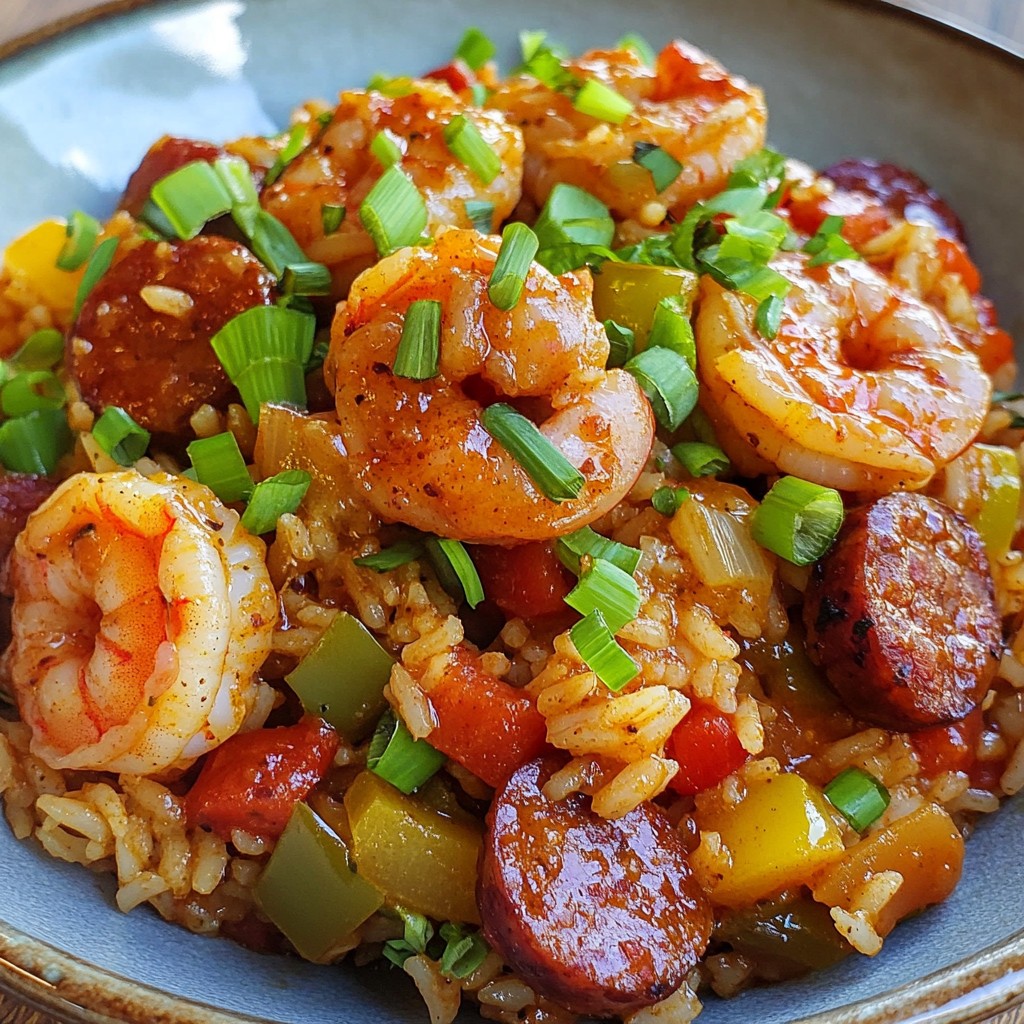
Are you ready to dive into a bowl of rich, spicy goodness? This Savory Shrimp and Sausage Jambalaya Delight Recipe is your ticket to a taste adventure! Featuring tender shrimp, smoky sausage, and a mix of vibrant veggies, this dish brings authentic Cajun flair to your kitchen. Stick around as I guide you through simple steps to create a meal that’s not only delicious but perfect for any gathering. Let’s get cooking!
Why I Love This Recipe
- Rich Flavor Profile: This jambalaya is a perfect blend of bold Cajun spices, smoky sausage, and succulent shrimp, creating a dish that is bursting with flavor.
- One-Pot Wonder: Cooking everything in a single pot simplifies cleanup and allows the flavors to meld beautifully as they simmer together.
- Customizable Ingredients: Feel free to swap out proteins or vegetables based on your preferences or what you have on hand, making it versatile for any occasion.
- Hearty and Satisfying: This dish is not only delicious but also filling, making it a great option for family dinners or gatherings with friends.
Ingredients
Main Ingredients
- 1 lb shrimp, peeled and deveined
- 1 lb smoked sausage, sliced (Andouille preferred)
- 1 cup long-grain rice
- 1 medium onion, chopped
- 1 bell pepper (any color), chopped
- 2 stalks celery, chopped
- 4 cloves garlic, minced
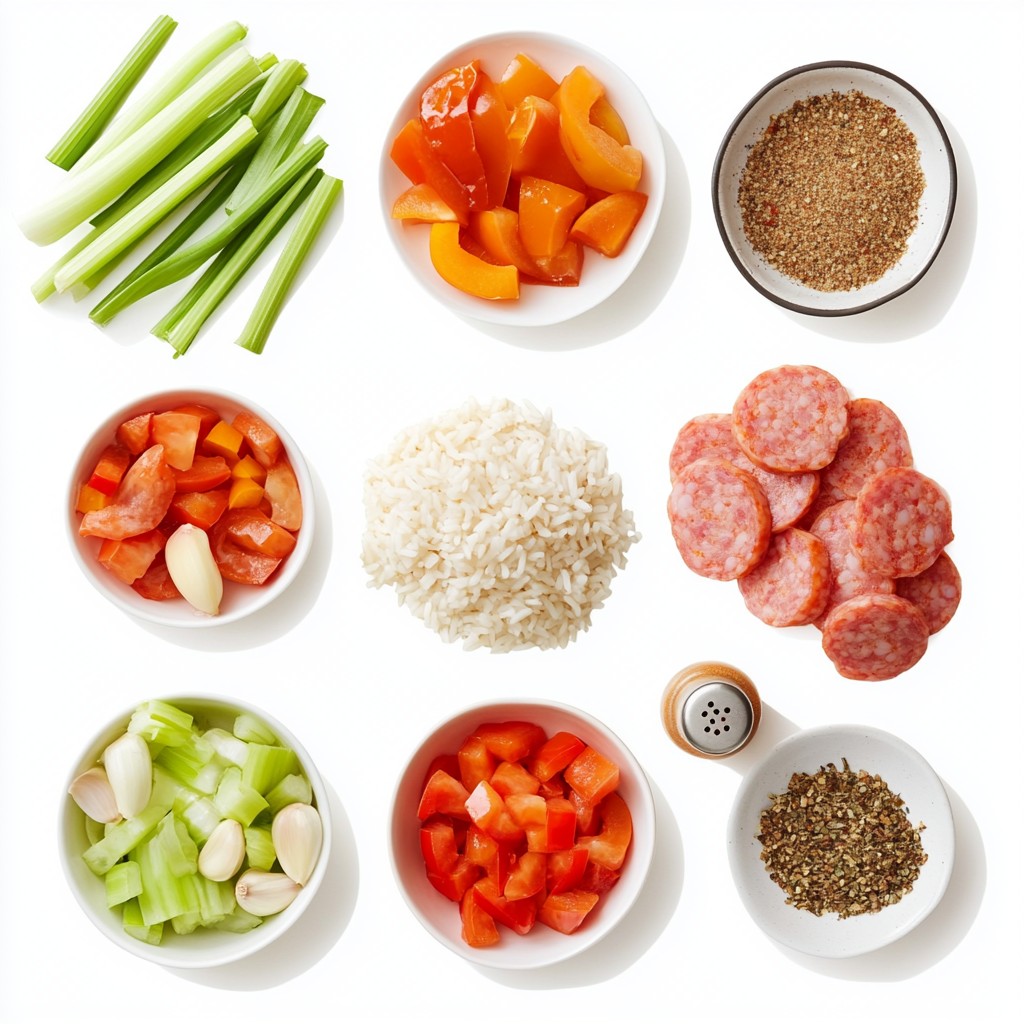
First, gather your main ingredients. The shrimp adds a sweet sea flavor. The smoked sausage, especially Andouille, brings a wonderful smokiness. Long-grain rice provides a nice texture. The vegetables, like onion, bell pepper, celery, and garlic, boost the dish with their colors and tastes.
Seasonings and Liquids
- 2 tablespoons Cajun seasoning
- 1 teaspoon dried thyme
- 3 cups chicken broth
- 1 can diced tomatoes (14 oz)
Next, we need seasonings and liquids. Cajun seasoning gives this dish its classic flavor. Dried thyme adds earthiness. Chicken broth enhances the dish with depth. The diced tomatoes add acidity and sweetness, making the dish bright and lively.
Optional Garnishes
- Chopped green onions
- Additional seasonings (salt and pepper)
Finally, consider garnishes. Chopped green onions add freshness and a pop of color. Feel free to adjust salt and pepper to suit your taste. These small touches can make a big difference in your meal's final presentation and flavor.
Step-by-Step Instructions
Sauté the Sausage
Start by heating the olive oil in a large pot over medium heat. Add the sliced sausage. Cook it until it turns brown, which takes about 5 to 7 minutes. Once done, remove the sausage from the pot. Leave the tasty drippings in the pot; they add flavor.
Cook Vegetables
Next, add the chopped onion, bell pepper, and celery to the pot. Stir them around for about 4 to 5 minutes. You want them to soften. Then, add the minced garlic. Cook it for another minute until you smell that delicious aroma.
Add Rice and Seasonings
Now, add the long-grain rice to the mix. Stir well to coat each grain with the oil and flavors. Sprinkle in the Cajun seasoning, dried thyme, and some salt and pepper. Mix everything thoroughly to ensure the spices spread evenly.
Combine Ingredients
Return the browned sausage to the pot. Now, add the can of diced tomatoes, including the juice. Pour in the chicken broth and drop in the bay leaf. Stir everything well until it looks combined.
Simmering Process
Bring the mix to a boil. Once it starts boiling, reduce the heat to low. Cover the pot and let it simmer for about 20 to 25 minutes. This cooking time lets the rice soak up the liquid and become tender.
Adding Shrimp
After the rice is tender, gently fold in the shrimp. Cover the pot again and keep cooking for another 5 to 7 minutes. The shrimp should turn pink and be cooked through. Don’t forget to remove the bay leaf when you’re done.
Final Steps and Serving
Taste the dish and adjust the seasoning if needed. Serve it hot, garnished with chopped green onions. This adds a fresh touch and a burst of color to your dish. Enjoy!
Tips & Tricks
Perfecting the Flavor
To enhance the Cajun seasoning, consider adding more spices. You can mix in smoked paprika or cayenne for extra kick. Fresh herbs like parsley or cilantro can also brighten the dish. Always taste as you go to adjust the flavors to your liking.
Using fresh ingredients can elevate your jambalaya. Fresh garlic packs a stronger taste than dried. Fresh bell peppers add crunch, while dried herbs are easier to store. If you use dried spices, make sure they are fresh for the best flavor.
Cooking Techniques
For sautéing, start with a hot pan. This helps the sausage brown well. You want to hear a sizzle when you add the sausage. Stir occasionally to avoid burning.
To get perfect rice texture, rinse the rice before cooking. This removes excess starch. Use the right amount of liquid, following the recipe closely. Avoid lifting the lid while it simmers; this keeps the steam in.
Serving Suggestions
Serve jambalaya with a side salad for freshness. A simple green salad or coleslaw works well. You might also enjoy crusty bread, perfect for soaking up juices.
Pair your dish with a light beverage. A cold beer or a glass of iced tea complements the flavors nicely. Consider serving a fruity cocktail for a fun twist.
Pro Tips
- Use Fresh Shrimp: For the best flavor and texture, opt for fresh shrimp over frozen. If using frozen shrimp, thaw them properly before cooking.
- Customize the Spice Level: Adjust the amount of Cajun seasoning based on your heat preference. Start with less and add more to taste.
- Rest Before Serving: Let the jambalaya rest for about 5-10 minutes after cooking. This helps the flavors meld and allows the rice to absorb any remaining liquid.
- Experiment with Additions: Feel free to add other ingredients like okra, bell peppers, or even chicken to make it your own twist on jambalaya.
Variations
Protein Substitutions
You can switch up the proteins in your jambalaya for fun.
- Alternative seafood options: Instead of shrimp, try scallops or crab. Both add a sweet taste.
- Using different types of sausage: Use chorizo for a spicy kick or turkey sausage for a leaner choice. Each brings a unique flavor.
Vegetarian & Vegan Options
If you want a meatless meal, you can still enjoy jambalaya.
- Substituting plant-based proteins: Use tofu or tempeh. These proteins soak up flavors and give a nice texture.
- Modifying the recipe for meatless cooking: Replace sausage with mushrooms or jackfruit. This adds depth without meat.
Flavor Profile Adjustments
You can change the flavor of your jambalaya easily.
- Spicy vs. mild Jambalaya: If you love heat, add cayenne pepper or hot sauce. For mild, skip these and use sweet peppers.
- Additional spices to experiment with: Try smoked paprika or cumin. These spices can give a new twist to your dish.
Feel free to mix and match these ideas to make jambalaya that suits your taste!
Storage Info
Storing Leftovers
To keep your jambalaya fresh, put it in an airtight container. This helps prevent it from drying out. Store it in the fridge. It will stay good for up to three days. Make sure it cools down before sealing the container.
Reheating Instructions
You can reheat jambalaya on the stovetop or in the microwave. To reheat on the stovetop, add a splash of chicken broth. Stir often until it heats up. If you use a microwave, cover the dish loosely. Heat it in short bursts to keep it moist. Both methods will help maintain its great texture and flavor.
Freezing Guidelines
To freeze jambalaya, let it cool completely. Then, spoon it into freezer bags. Squeeze out as much air as you can before sealing. It will last up to three months in the freezer. When you’re ready to eat, thaw it overnight in the fridge. Reheat it on the stovetop or microwave, adding a bit of broth to keep it juicy.
FAQs
What is Jambalaya?
Jambalaya is a one-pot dish from Louisiana. It mixes rice, meat, and vegetables. The dish has roots in Spanish, French, and African cooking. It is known for its bold flavors and hearty texture. Traditionally, it includes either seafood, chicken, or sausage.
Can I make Jambalaya in advance?
Yes, you can make Jambalaya ahead of time. Cook it fully, then let it cool. Store it in an airtight container in the fridge. It can last for up to three days. Reheat it on the stove or in the microwave.
What can I use instead of Andouille sausage?
If you can't find Andouille sausage, try these options:
- Kielbasa
- Chorizo
- Smoked turkey sausage
These all add great flavor, but may change the taste a bit.
How spicy is Jambalaya?
Jambalaya can be mild or spicy. The heat depends on the Cajun seasoning and sausage used. To adjust the spice, add less seasoning or use mild sausage. You can always add hot sauce later for more heat.
Is Jambalaya gluten-free?
Yes, Jambalaya can be gluten-free. Most ingredients like rice, shrimp, and sausage are gluten-free. Just check the labels on the sausage and broth to be sure. Avoid any products with wheat or gluten added.
In this post, we explored how to make a delicious Jambalaya. We covered key ingredients, like shrimp and sausage, and discussed the importance of seasonings. The step-by-step guide makes cooking easy. We shared tips for flavor and variations to suit your taste.
Jambalaya is a versatile dish that brings joy to any meal. Try it out and enjoy the rich flavors from your kitchen. Don't be afraid to experiment with ingredients. Happy cooking!