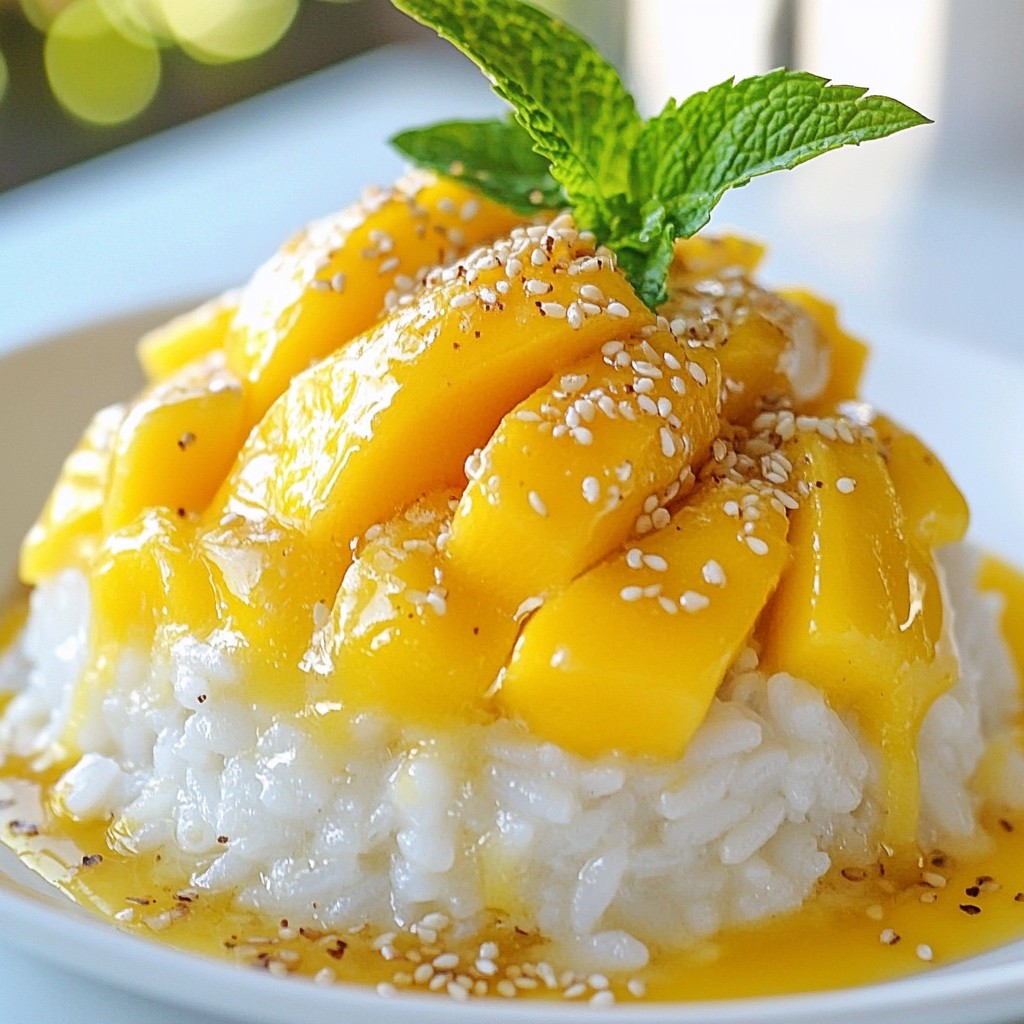
Are you ready to indulge in a creamy, delightful dessert? Thai Mango Sticky Rice blends sweet mango with rich coconut sauce for a treat you won't forget. With just a few simple ingredients like glutinous rice and coconut milk, you can whip up this classic dish at home. In this guide, I’ll share my favorite tips and tricks to make your sticky rice perfect. Let’s dive into the deliciousness!
Why I Love This Recipe
- Deliciously Sweet and Creamy: The combination of coconut milk and ripe mangoes creates a sweet and creamy dessert that is simply irresistible.
- Easy to Make: With just a few simple ingredients and steps, you can create this delightful dish with ease, perfect for any occasion.
- Perfect for Sharing: This recipe serves four, making it ideal for gatherings or family meals, allowing everyone to enjoy a taste of Thailand.
- A Visual Feast: The vibrant colors of the mangoes and the creamy sticky rice make this dessert as beautiful as it is delicious, sure to impress your guests.
Ingredients
Essential Ingredients for Thai Mango Sticky Rice
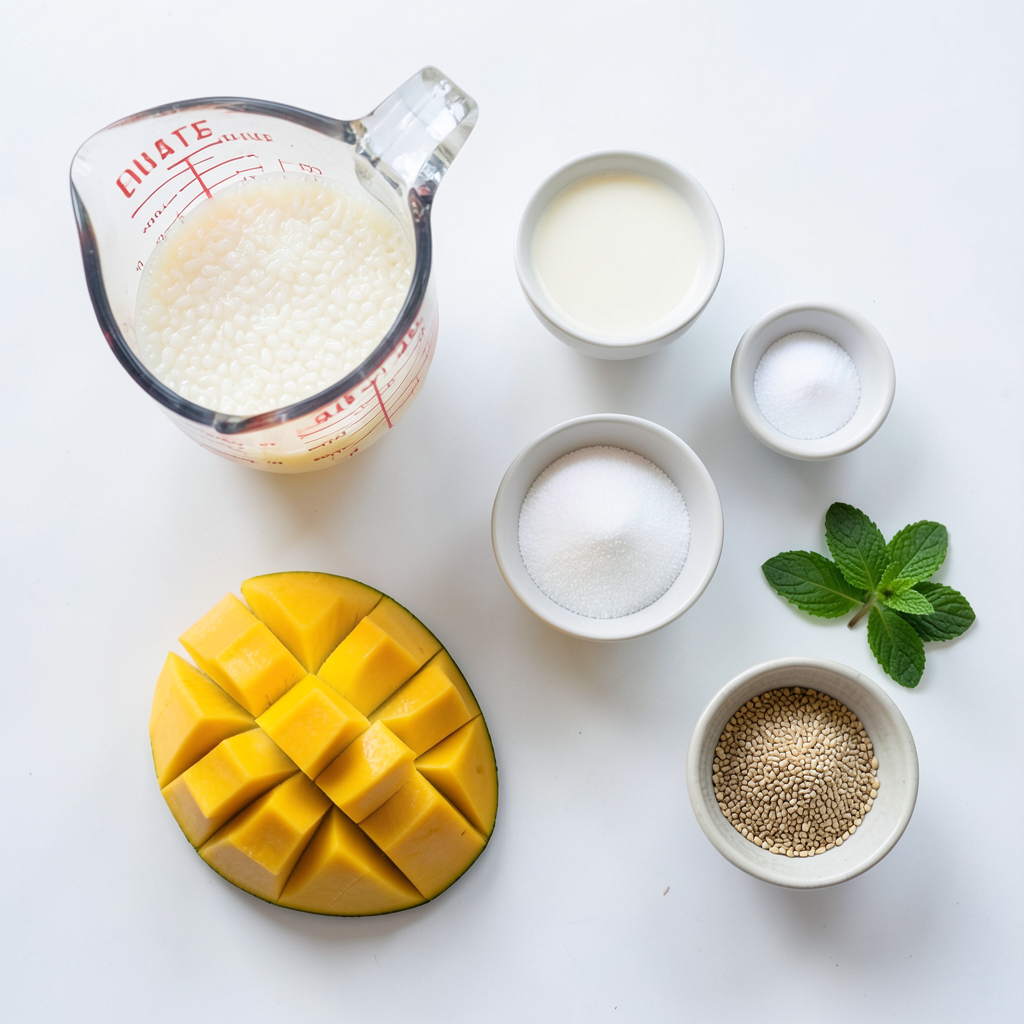
- 1 cup glutinous rice (sticky rice)
- 1 ½ cups coconut milk
- 1/2 cup sugar
- 1/2 teaspoon salt
In this recipe, glutinous rice acts as the base. It gives the dish its unique sticky texture. You will need one cup. Make sure to rinse it well.
Next, we have coconut milk. You will need one and a half cups. This milk adds creaminess and richness to the dish.
Sugar is essential for sweetness. Use half a cup. It balances the flavors of the coconut milk.
Lastly, a touch of salt enhances the taste. Just half a teaspoon will do.
Optional Garnishes and Variations
- 2 tablespoons sesame seeds (toasted)
- Fresh mint leaves for garnish (optional)
For some added crunch, you can sprinkle toasted sesame seeds. Just two tablespoons will add great texture.
Fresh mint leaves give a pop of color and flavor. They are optional, but I recommend them for a refreshing touch.
Step-by-Step Instructions
Preparing the Sticky Rice
First, rinse the glutinous rice under cold water. Do this until the water runs clear. This step helps remove excess starch. After rinsing, soak the rice in water for at least four hours. Soaking overnight is even better. It makes the rice soft and fluffy.
Next, drain the soaked rice. Place it in a steamer basket lined with cheesecloth or a clean kitchen towel. This keeps the rice from falling through. Steam the rice over simmering water for about 30 to 40 minutes. The rice is done when it feels tender and fully cooked.
Making the Coconut Sauce
While the rice steams, it’s time to make the coconut sauce. In a pot, combine the coconut milk, sugar, and salt. Stir these ingredients well. Heat the mixture over medium heat. Keep an eye on it; you want the sugar to dissolve but not boil. Once the sugar is dissolved, set aside 1/4 cup of the sauce for later.
Final Assembly and Serving
Once the rice is finished, transfer it to a large mixing bowl. Pour the coconut sauce over the warm rice, except for the reserved 1/4 cup. Mix gently, folding it in so the rice is evenly coated. Let it sit for 15 to 20 minutes. This allows the rice to absorb all the flavors.
To serve, place a generous portion of the sticky rice on a plate. Arrange the sliced mango beside it. Drizzle the reserved coconut sauce over the top. For added crunch, sprinkle toasted sesame seeds on the dish. If you like, garnish with fresh mint leaves for a pop of color and flavor.
Tips & Tricks
Perfecting the Sticky Rice Texture
- Soaking time variations: Soaking the glutinous rice is vital. You can soak it for at least 4 hours. For the best texture, try soaking overnight. This helps the rice absorb water and cook evenly. If you are short on time, even 1 hour can work, but the texture may be chewier.
- Choosing the right cooking method: Steaming is the best method for sticky rice. Use a steamer basket lined with cheesecloth. Steam the rice for 30 to 40 minutes. Make sure to check it for doneness. The rice should be soft and sticky when done.
Enhancing the Flavor
- How to infuse coconut flavor: To infuse a rich coconut flavor, mix coconut milk, sugar, and salt. Heat this mixture gently. Avoid boiling it; just warm it until the sugar dissolves. This step adds depth to your sticky rice.
- Suggested cooking equipment: Use a pot for the coconut sauce and a steamer for the rice. A rice cooker can also work, but steaming gives the rice a unique texture. A cheesecloth is essential for keeping the rice fluffy and separated.
Presentation Ideas
- Creative plating techniques: For a beautiful dish, create a small mound of sticky rice on one side of the plate. Lay the mango slices next to it. Drizzle the reserved coconut sauce on top of the rice. This creates a lovely contrast on the plate.
- Garnishing tips for visual appeal: Add toasted sesame seeds over the top for crunch. Fresh mint leaves can give a pop of color. These simple touches make the dish look inviting and bright.
Pro Tips
- Soaking Time Matters: Soaking the glutinous rice for at least 4 hours helps achieve the perfect texture. For even better results, soak it overnight to ensure it cooks evenly.
- Steam for Perfection: Ensure the water in your steamer is simmering, not boiling, to cook the rice gently. This prevents the rice from becoming gummy and keeps it fluffy.
- Check Coconut Milk Quality: Use high-quality coconut milk for a rich and creamy sauce. Look for brands with minimal additives for the best flavor.
- Presentation is Key: For an appealing presentation, arrange the mango slices artistically and drizzle the reserved coconut sauce over the dish right before serving.
Variations
Different Types of Mangoes to Use
When making Thai mango sticky rice, the type of mango matters. You can choose sweet or tart mangoes. Sweet mangoes, like the Nam Dok Mai, taste great with the creamy rice. Tart mangoes, like the green mango, add a nice balance. The choice depends on your taste. Mangoes are in season at different times. Make sure to pick ripe ones for the best flavor.
Alternative Coconut Sauce Recipes
You can change the coconut sauce to fit your needs. If you want a lighter version, use low-fat coconut milk. This makes the dish less rich but still creamy. You can also add spices for extra flavor. Try mixing in a bit of vanilla or cinnamon. These small changes can create a new twist on the classic sauce.
Other Toppings or Ingredients
You don’t have to stick to the basics. Add fun toppings to your mango sticky rice. Nuts or seeds can give it a nice crunch. Toasted sesame seeds work well here. You can also add coconut flakes for extra texture. Fresh fruits, like berries or bananas, can mix things up too. Let your creativity shine!
Storage Info
How to Store Leftover Sticky Rice
To keep your leftover sticky rice fresh, follow these easy steps:
- Refrigeration tips: Place sticky rice in an airtight container. Store it in the fridge for up to three days. Make sure the rice cools down to room temperature before sealing it. This helps keep it from getting too soggy.
- Freezing instructions: For longer storage, freeze the sticky rice. Portion it into small bags or containers. It can last up to three months in the freezer. When ready to eat, thaw it overnight in the fridge.
Reheating Methods
To enjoy your sticky rice again, reheating is key. Here are the best ways to do it:
- Best practices for maintaining texture: When reheating, add a splash of water. This will help keep the rice moist. Cover the dish with a lid or a damp paper towel. This prevents it from drying out.
- Microwave vs. stove-top reheating: The microwave is quick and easy. Heat it in short bursts, stirring in between. For stove-top reheating, place the rice in a pan with a little water. Cover it and heat on low, stirring occasionally. Both methods work well, but the stove-top method often keeps the texture better.
FAQs
What is the difference between glutinous rice and regular rice?
Glutinous rice, also called sticky rice, is special. It has a higher starch content. This makes it sticky when cooked. Regular rice does not have this quality. Regular rice tends to be fluffy and dry. You can use glutinous rice for desserts or dishes that need a sticky texture. It is key for Thai Mango Sticky Rice.
Can I use canned coconut milk for this recipe?
Yes, you can use canned coconut milk! It is a great option. Just make sure to choose full-fat coconut milk for the best flavor. Light coconut milk will not give the same creaminess. Shake the can well before opening to mix the contents.
How do I know when the sticky rice is cooked?
The sticky rice is done when it is tender and slightly chewy. It should stick together but not be mushy. You can test it by tasting a few grains. If they are soft and have a slight bounce, your rice is ready. Steaming for about 30-40 minutes usually works well.
What are some common serving suggestions for Thai Mango Sticky Rice?
You can serve Thai Mango Sticky Rice in many ways. Here are some ideas:
- Place sticky rice and mango side by side on a plate.
- Drizzle coconut sauce over the top.
- Sprinkle toasted sesame seeds for crunch.
- Add fresh mint leaves for color and flavor.
Each suggestion adds a fun twist to the dish.
Can I make this dish vegan-friendly?
Yes, this dish is already vegan-friendly! All the ingredients are plant-based. Glutinous rice, coconut milk, sugar, and mangoes are vegan. So, you can enjoy this treat without worry. It’s a perfect dessert for everyone!
Thai Mango Sticky Rice is a delicious treat you can make at home. We explored the essential ingredients, from glutinous rice to coconut milk. I provided step-by-step instructions for preparing the dish, along with tips for perfecting texture and flavor. Variations let you switch up the recipe, and storage tips ensure your leftovers stay fresh. Remember, cooking is about fun and creativity. Enjoy your own mango sticky rice, and share this treat with friends and family!