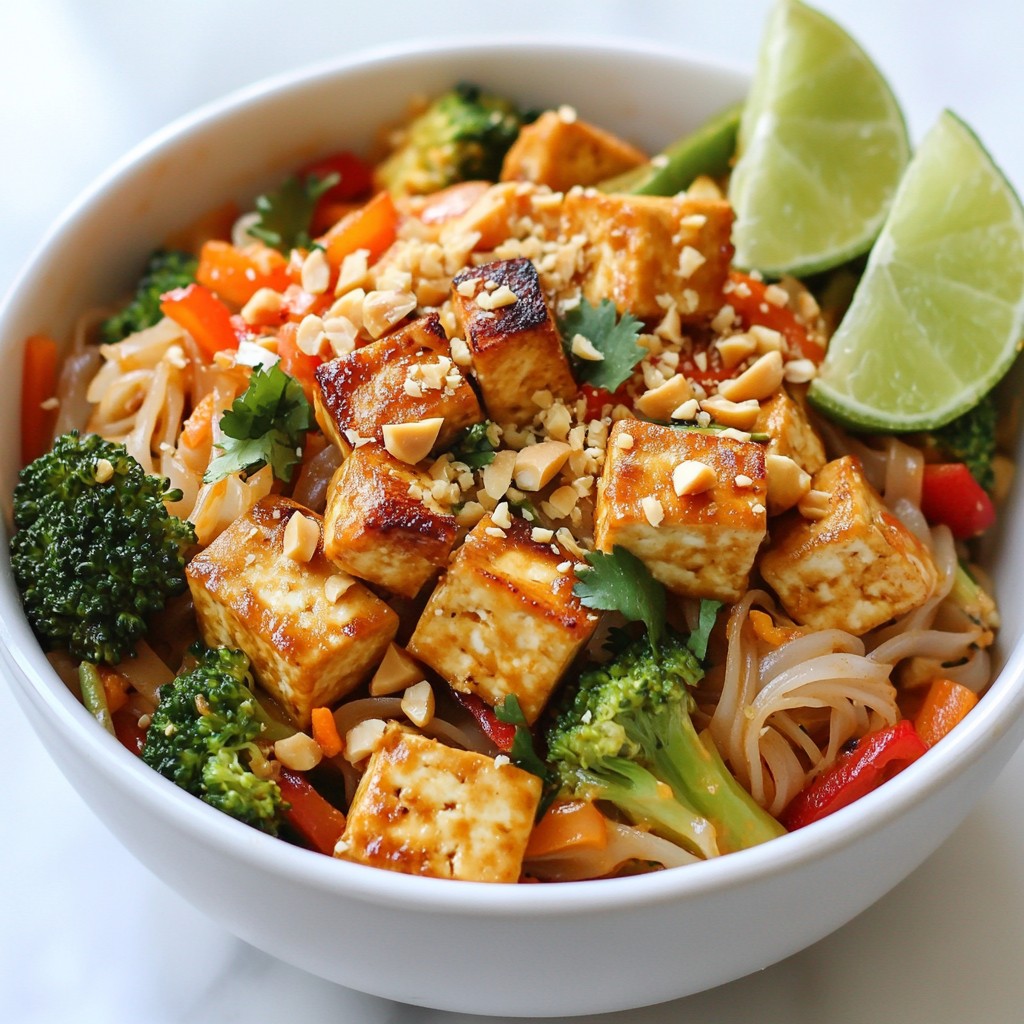
Are you ready to whip up a flavorful Veggie Pad Thai? This easy rice noodle dish packs a punch with vibrant veggies and tasty sauce. I’ll guide you through each step, making cooking fun and simple. Whether you’re a pro or just starting, you'll find tips for perfecting texture and flavor. Let's dive into this delicious recipe that’s sure to brighten your meal!
Why I Love This Recipe
- Fresh and Healthy: This Veggie Pad Thai is packed with vibrant vegetables and plant-based protein, making it a nutritious meal option.
- Quick and Easy:
- Customizable: You can easily adapt this recipe by adding your favorite vegetables or swapping tofu for another protein.
- Flavorful Sauce: The combination of soy sauce, tamarind paste, and lime juice creates a deliciously tangy and sweet flavor that elevates the dish.
Ingredients
List of Required Ingredients
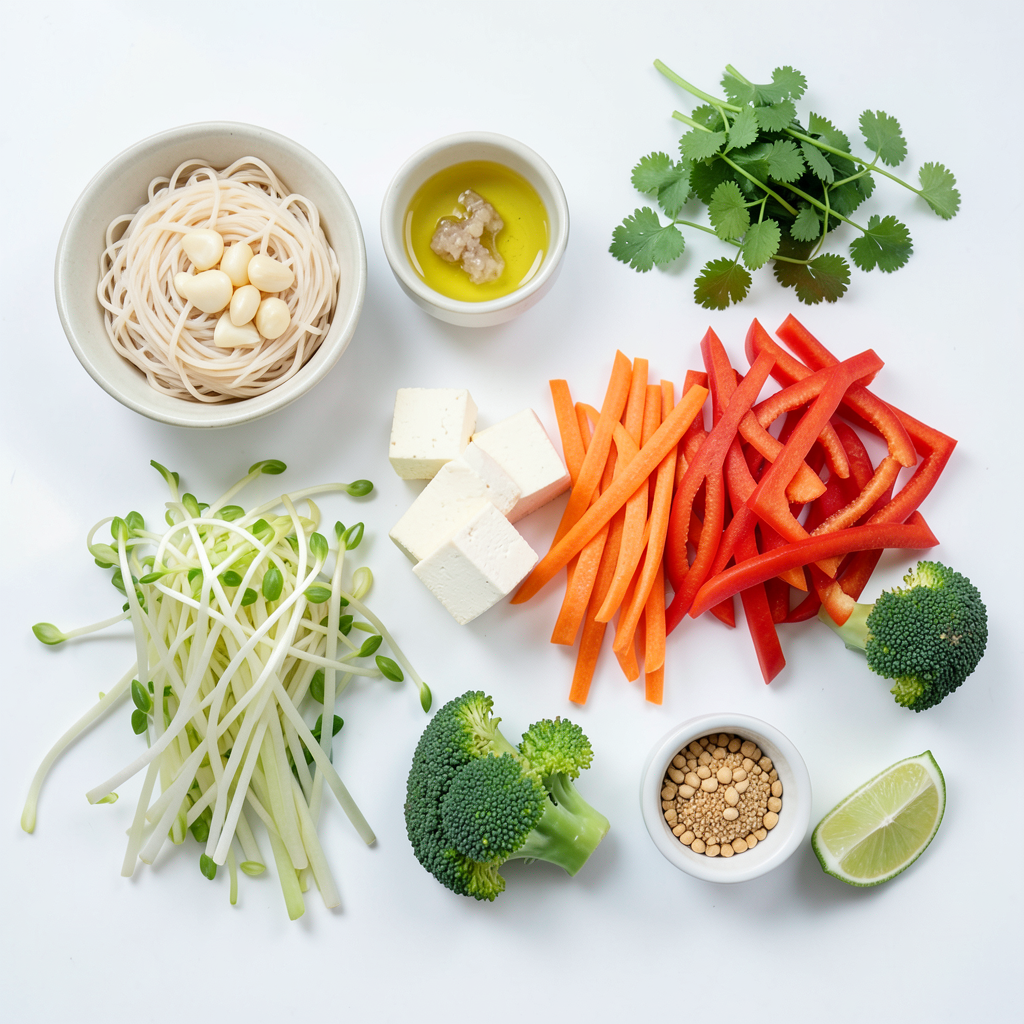
To make a tasty Veggie Pad Thai, gather these ingredients:
- 8 oz rice noodles
- 2 tablespoons vegetable oil
- 3 cloves garlic, minced
- 1 cup firm tofu, cubed
- 1 cup bean sprouts
- 1 cup carrots, julienned
- 1 red bell pepper, sliced
- 1 cup broccoli florets
- 2 green onions, chopped
- 3 tablespoons soy sauce
- 1 tablespoon tamarind paste
- 2 tablespoons brown sugar
- 1 tablespoon lime juice
- Crushed peanuts, for garnish
- Lime wedges, for serving
- Fresh cilantro, for garnish (optional)
Ingredient Substitutions
You can swap some ingredients for a different taste or to fit your diet:
- Use rice vermicelli instead of rice noodles for a thinner texture.
- Replace tofu with chickpeas or tempeh for protein.
- You can use any bell pepper or even zucchini instead of red bell pepper.
- If you don’t have tamarind paste, mix lime juice and brown sugar as a substitute.
- Try sesame oil instead of vegetable oil for a nutty flavor.
Nutritional Information
Veggie Pad Thai is not just delicious; it's also nutritious! Here’s a quick look:
- Calories: Approximately 350 per serving
- Protein: About 15 grams from tofu and veggies
- Fat: Roughly 15 grams, mostly from oil and peanuts
- Carbohydrates: Around 50 grams from noodles and veggies
- Fiber: About 5 grams, thanks to the veggies
This dish is a good source of vitamins and minerals, making it a healthy choice.
Step-by-Step Instructions
Cooking the Noodles
Start by boiling water in a large pot. Add 8 ounces of rice noodles and cook them according to the package instructions. This usually takes about 4 to 6 minutes. Once they are soft, drain the noodles and set them aside. This step is crucial as it forms the base of your Veggie Pad Thai.
Sautéing the Aromatics and Tofu
Next, grab a large wok or skillet. Heat 2 tablespoons of vegetable oil over medium heat. Once the oil is hot, add 3 cloves of minced garlic. Sauté the garlic for about 30 seconds until it smells great. Then, add 1 cup of cubed firm tofu. Cook the tofu for about 5 to 7 minutes. You want it to be golden brown on all sides. This gives the dish a nice texture and flavor.
Stir-Frying the Vegetables
Now it’s time for the veggies! Toss in 1 cup of broccoli florets, 1 cup of julienned carrots, and 1 sliced red bell pepper. Stir-fry these vegetables for about 5 minutes until they become slightly tender. The colors should pop, and the aroma will be delightful. After that, add the cooked rice noodles, along with 1 cup of bean sprouts and 2 chopped green onions. Pour in 3 tablespoons of soy sauce, 1 tablespoon of tamarind paste, 2 tablespoons of brown sugar, and 1 tablespoon of lime juice. Toss everything together gently for 3 to 4 minutes. Ensure that the noodles are fully coated in the sauce. Adjust the taste if needed, adding more soy sauce or lime juice based on your preference. Finally, remove the wok from heat and serve the dish hot.
Tips & Tricks
How to Achieve the Perfect Texture
To get perfect noodles, cook them just right. Follow the package instructions closely. Overcooking can make them mushy. After cooking, rinse them in cold water. This stops the cooking process and keeps them firm. When you mix noodles with veggies, stir gently. This keeps them from breaking apart.
Adjusting Flavors
Taste is key in Veggie Pad Thai. Start with the basic sauce mix of soy sauce, tamarind paste, and lime juice. After mixing, take a small taste. If you want more saltiness, add soy sauce. For extra tang, squeeze in more lime juice. If it’s too sour, a pinch of brown sugar can balance it out.
Common Mistakes to Avoid
Many people forget to prep their ingredients first. Chop all veggies and tofu before cooking. This makes the cooking process smooth. Another mistake is rushing the cooking time. Give the tofu time to brown for better flavor. Lastly, don’t skip the garnish. Crushed peanuts and fresh cilantro add great taste and look.
Pro Tips
- Perfect Noodle Texture: Make sure to slightly undercook the rice noodles before adding them to the stir-fry. They will continue to cook when combined with the other ingredients.
- Flavor Boost: For an extra depth of flavor, consider adding a splash of sesame oil or a dash of chili flakes to the dish while cooking.
- Freshness is Key: Use fresh vegetables for the best texture and flavor. Feel free to substitute with seasonal veggies that you have on hand.
- Customizable Protein: If you're not a fan of tofu, try using tempeh or chickpeas as a protein alternative for a different taste and texture.
Variations
Additional Vegetables and Proteins
You can change up your Veggie Pad Thai by adding different vegetables. Try snap peas, zucchini, or mushrooms. They add great textures and flavors. If you want extra protein, consider adding chickpeas or edamame. These options make it hearty and filling.
Spicy Veggie Pad Thai
If you love heat, turn up the spice! Add sliced fresh chili peppers or a dash of chili flakes. You can also mix in sriracha when you toss the noodles. This gives you that extra kick that makes each bite exciting.
Gluten-Free Options
For a gluten-free version, swap soy sauce with tamari. It has a similar taste without gluten. You can also use rice noodles for the base, which are naturally gluten-free. Enjoy a tasty dish that fits your diet while keeping rich flavors intact.
Storage Info
How to Store Leftovers
To store your Veggie Pad Thai, let it cool first. Place it in an airtight container. This helps keep the flavor fresh. Make sure to seal it tightly. Store it in the fridge for up to three days. If you want to keep it longer, consider freezing it.
Reheating Tips
When you are ready to eat, reheating is simple. You can use a skillet or microwave. If using a skillet, add a splash of water or oil. This helps prevent sticking. Heat it over medium heat until warm. If using a microwave, cover it with a lid. Heat it for 1-2 minutes, checking halfway. Stir it to ensure even heating.
Freezing Recommendations
Freezing Veggie Pad Thai is a great option. Divide it into portions for easy meals later. Use freezer-safe bags or containers. Remove as much air as possible. Label the bags with the date. It can last up to two months in the freezer. When ready to eat, thaw it in the fridge overnight before reheating.
FAQs
Can I make Veggie Pad Thai in advance?
Yes, you can make Veggie Pad Thai in advance. Cook the noodles and stir-fry the veggies. Store them separately to keep the texture. When ready to serve, heat them together in a pan. Add fresh lime juice and peanuts for flavor. This dish tastes great even after a day in the fridge.
What are the best sides to serve with Veggie Pad Thai?
Serve Veggie Pad Thai with simple sides. Here are a few tasty options:
- Spring rolls for crunch
- Cucumber salad for freshness
- Thai mango salad for sweetness
- Steamed dumplings for heartiness
These sides balance the flavors and add variety to your meal.
How do I make Pad Thai sauce from scratch?
Making Pad Thai sauce is easy. Mix these ingredients:
- 3 tablespoons soy sauce
- 1 tablespoon tamarind paste
- 2 tablespoons brown sugar
- 1 tablespoon lime juice
Combine them in a bowl and stir. Taste the sauce and adjust if needed. This homemade sauce adds a bright flavor to your dish.
Making Veggie Pad Thai is simple and fun. We covered all the key steps, from gathering ingredients to cooking and storing leftovers. Remember, you can adjust flavors and try fun variations, like adding spice or using gluten-free options. With these tips, you'll avoid common mistakes and enhance your dish's texture. Whether it's for a quick meal or for sharing, Nutritious and tasty meals can be yours. Enjoy your cooking and savor every bite!